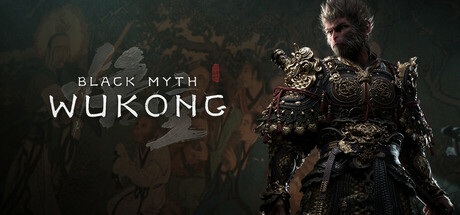
The first time you see Black Myth: Wukong running properly, it is difficult to think about much else. Game Science spent years releasing trailers that looked too good to be real, and then they shipped a game that largely delivers on them. It is one of the best looking games available on any platform, full stop. The fact that it also has excellent combat and a fascinating mythological foundation makes it one of the more complete surprises of 2024. It is not without issues, but the core of what Game Science built here is genuinely special.
Staff Combat That Feels Right
The Sun Wukong mythology positions the Monkey King as one of the most capable warriors in Chinese literary history, and Game Science have channelled that into a combat system that feels appropriately powerful while still demanding skill. Your staff has real weight and reach, and the rhythm of building Focus points through light attacks to unlock heavier charged strikes gives every encounter a flow that rewards learning.
The Stance system provides meaningful depth. Three stances alter how your staff handles, shifting the pace and style of combat rather than just tweaking numbers. The Smash Stance is deliberate and hard-hitting. The Pillar Stance opens up aerial options and repositioning tools. Swapping between them fluidly is optional in early encounters and something approaching essential against the tougher bosses.
Spells add another layer. Immobilise, which freezes enemies for a critical opening, becomes indispensable against certain bosses. The Cloud Step dodge mechanic, which leaves a decoy behind, rewards reading enemy aggression patterns. None of it is optional fluff. The game expects you to engage with the full toolkit if you want to progress comfortably on the higher difficulties.
Compared to the obvious Soulslike comparisons the game invites, the feel is more kinetic. You are not playing a cautious, defensive game. You are Sun Wukong and you are supposed to be doing spectacular things.
Visuals That Set a Benchmark
There is no honest way to write about Black Myth: Wukong without spending time on what it looks like, because it genuinely pushes what games are currently capable of aesthetically. The environments draw on Chinese architecture, landscape painting, and Buddhist iconography in ways that are consistently beautiful and occasionally breathtaking. Dense forests where light filters through bamboo. Temple complexes with crumbling stonework. Snow-covered mountain paths with enemy design drawn directly from classical mythological illustration.
Unreal Engine 5’s Lumen and Nanite technologies are running hard throughout, and on capable hardware the results are extraordinary. The game supports path tracing on PC for those with the GPU headroom, and it is one of the most impressive implementations of the technology available.
The console picture is more mixed. PS5 has a performance mode that targets 60fps, though it does not always hold it in demanding areas. The fidelity mode looks superb but at 30fps. Neither option is bad, but the PC version on high-end hardware is clearly the definitive way to play if you have access to it.
The Journey to the West
The source material is Journey to the West, one of the most celebrated novels in Chinese literary history. You are not playing as the Sun Wukong of that story directly but as the Destined One, a figure retracing the journey and fighting through enemies and bosses drawn from the novel’s vast cast of gods, demons, and spirits.
For players unfamiliar with the source material, this presents a challenge. The game does not hold your hand through the lore. Bosses appear with minimal introduction. Narrative context is delivered through collectible item descriptions and brief cinematic sequences rather than in-game explanation. If you go in expecting to follow the story without prior knowledge, you will miss a great deal of what the game is doing.
This is not necessarily a flaw. Games built on dense source material often work better for the audience that knows that material. But it is worth being honest about: a significant portion of Western players will be admiring the presentation without fully grasping the context.
Boss Design and Inconsistency
The boss roster is one of the game’s genuine highlights in both visual design and encounter design. The sheer creativity on display in some fights, the scale, the mythology behind the enemy types, the spectacle of certain late-game encounters, is remarkable.
The difficulty is considerably less consistent. Some bosses are exhilarating challenges that test your mastery of the combat system. Others spike awkwardly, particularly certain optional encounters, in ways that feel poorly tuned. And a handful of mandatory story bosses are significantly easier than the optional ones surrounding them. The curve is uneven in a way that Soulslike veterans will be more patient with than newcomers.
Worth Knowing
- The review embargo controversy was significant. Game Science restricted review access in ways that excluded certain outlets and raised questions about transparency. It is worth knowing this happened, even if the game itself stands on its own merits
- Console performance, particularly on PS5, can be inconsistent in demanding areas. The game can struggle to hold its target frame rates in performance mode during heavy combat
- The narrative is rooted deeply in Journey to the West. Familiarity with the source material enriches the experience considerably
- Some boss difficulty spikes are sharp and feel inconsistently tuned compared to the rest of the game
- The PC version is demanding. A high-end GPU is required to take full advantage of the visual options, and even capable machines can find certain areas taxing
- There is no multiplayer of any kind. This is a solo experience throughout
Verdict
Black Myth: Wukong is an 8 out of 10, and the difference between that and a higher score comes down to the inconsistent boss difficulty, the demanding performance expectations on console, and a narrative that rewards prior knowledge it cannot reasonably expect its audience to have. These are real issues and they shape the experience in ways that some players will find more frustrating than others.
But the core of what Game Science built is genuinely excellent. The combat is fluid and deep enough to reward investment. The visuals are among the best on any platform. The mythology provides a foundation that is unlike anything else in the genre, and when the game is firing on all cylinders it is spectacular. For action RPG fans willing to put time into learning the system, Black Myth: Wukong is absolutely worth your time. A landmark debut from a studio that clearly has more to say.