Spyro the Dragon and Crash Bandicoot launched in the same year on the same hardware and were immediately, lazily compared to each other. The comparison does not survive ten minutes with either game. They are completely different things. Crash is about precision and repetition. Spyro is about freedom and discovery. They share a platform and an era and not much else.
Insomniac’s debut platformer asked a specific question: what if the pleasure of the game was simply being in the world? The environments in Spyro are not challenges to be survived but spaces to be inhabited. You are a small purple dragon. You charge into sheep. You glide from cliffs. You breathe fire at gems and watch them scatter. This is the game.
The Worlds
Each of the game’s homeworlds contains a cluster of smaller levels accessed through portals, and the design philosophy is consistent: arrival, orientation, exploration, return. Every gem in the level can be collected. Every egg can be recovered. The game tells you how complete you are and trusts you to decide when you are done.
The worlds range in theme from the medieval (the opening Artisans home) to the absurd (Dream Weavers, which takes place in a floating nightmare landscape). The variety maintains interest across the game’s length without ever feeling arbitrary.
Gnasty Gnorc, the villain, is comically underpowered as an antagonist, which is appropriate: Spyro is not a game about danger. The threat is notional. The liberation of the dragon elders from their crystal prisons is the narrative frame, but nobody is playing Spyro for the narrative. They are playing it for the feeling of a world that wants to be explored.
Stewart Copeland’s Soundtrack
The Police drummer Stewart Copeland composed Spyro’s soundtrack, and it remains one of the most distinctive game soundtracks of the PlayStation era. Each world has its own theme, ranging from Celtic folk to jazz to something that defies easy categorisation. The music has the quality of supporting atmosphere without ever becoming background noise, which is the ideal outcome for a game where you spend significant time simply moving through space.
How It Holds Up
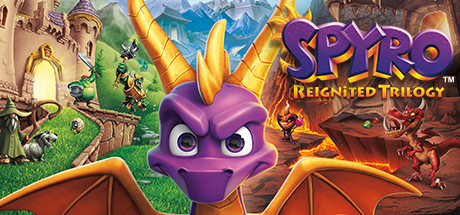
The Reignited Trilogy (2018) by Toys for Bob remade all three original Spyro games with modern visuals while preserving the movement and level layouts. The art direction of the remaster adds detail and warmth while maintaining the tone of the originals. It is the definitive version for newcomers and a generous piece of nostalgia delivery for returning players.
The one caveat: the original game’s soundtrack was replaced with new recordings by a different composer for the initial release. Patches restored the Copeland compositions following community pressure. Make sure your version is patched.
Spyro the Dragon is a gentle game in the best sense. Not simple: the 120 per cent completion run requires real attention. But gentle in intent. It wants you to enjoy being there. In 1998 that was a statement. In 2026 it still sounds like a good offer.