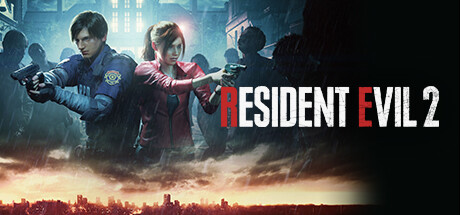
Raccoon City in 1998 was the first time a mainstream game felt genuinely dangerous. Not difficult: dangerous. The police station had a logic to it that the player had to learn, enemies that could not always be killed and sometimes should not be, and resources so scarce that every shotgun shell was a decision rather than an action. The original Resident Evil 2 is the series at peak confidence, and the 2019 remake is excellent, but something specific lives in the original that the remake’s over-the-shoulder camera cannot fully preserve.
Leon and Claire
The dual-scenario structure is the game’s most elegant design decision. Leon Kennedy and Claire Redfield arrive in Raccoon City separately, encounter each other briefly, and then proceed through their own version of the same collapse. Each character has different items, different supporting characters, and different story beats. Leon encounters Ada Wong. Claire encounters Sherry Birkin and her father. The paths intersect but do not duplicate.
The B scenarios, unlocked by completing the game with each character, take place during the same timeline and account for the other character’s actions. Items left in one run can be found in the other. This structural design created a game that rewarded multiple playthroughs not as difficulty variation but as genuine story completion.
Mr. X, the hulking Tyrant who pursues Leon and Claire through the police station regardless of their actions, introduced a mechanic that Alien: Isolation and RE2’s 2019 remake both built careers from: the unkillable pursuer. He cannot be stopped, only briefly delayed. His footsteps in another corridor communicate threat without requiring direct confrontation. The design is simple and perfect.
The Raccoon City Police Station
The RCPD is one of the finest level designs in the history of the medium. It is a former art museum converted into a police station, which explains why its architecture makes no practical sense as a place of work and perfect sense as a game environment. The main hall connects to everything. Keys unlock shortcuts that compress the space. The layout rewards memorisation and punishes the player who doesn’t build that memorisation.
The environmental storytelling in the notes, memos, and bodies scattered through the building creates Raccoon City’s collapse without a single cutscene. You learn what happened to individual officers from the documents they left behind.
How It Holds Up
The original PS1 version is genuinely difficult to return to after the 2019 remake: the tank controls and fixed camera angles, functional as they were in 1998, require a specific kind of patience that modern gaming does not cultivate. The remake is the version for newcomers.
For those who were there originally: the original holds something the remake does not, and both things are true simultaneously. The 1998 game made Raccoon City feel inescapable. The 2019 game made it feel cinematic. The best survival horror games feel inescapable.