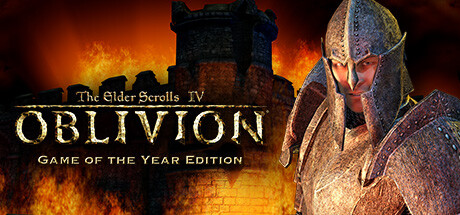
The most honest thing you can say about Oblivion is that most people who played it never finished the main quest. This is not a criticism. The main quest, in which you close the Oblivion gates threatening Cyrodiil and deliver the MacGuffin to the relevant authority, is fine. The guild questlines, the faction politics, the random encounters in the wilderness, the abandoned forts full of bandits who drop levelled loot: these are the reason people lost 200 hours to a game released in 2006.
Bethesda’s formula, first outlined in Morrowind and perfected (arguably) in Oblivion, is one of gaming’s most enduring ideas: a world with enough credible density that the player feels free rather than directed. Cyrodiil is built from Roman architectural references, dense forests, and cave systems that all operate by the same rules. The logic is consistent. The world pushes back against you in predictable ways. That predictability reads as freedom.
The Factions
The Dark Brotherhood questline. If you played Oblivion, you either joined it immediately when you received the Black Sacrament quest hook, or you tried to resist and eventually succumbed. The storyline, which involves an assassin’s guild with its own internal politics, a contract that requires killing someone you’ve come to care about, and a betrayal that uses your trust against you, is the best writing Bethesda produced in this era.
The Mages Guild, the Fighters Guild, the Thieves Guild: each offers a complete narrative arc with its own character cast. The content density in Oblivion is the game’s most significant achievement: most players encountered a fraction of what was there and still spent more time with it than most games allowed.
The Oblivion Gates
The Oblivion gates are the game’s most memorable visual set piece and its most repetitive content. You enter a portal into the realm of Oblivion, a volcanic hellscape in amber and black, navigate to a central tower, and close the gate by removing a stone. The first time is extraordinary. The fifth time is routine. The game has more gates than you will want to close.
This is the most accurate expression of Bethesda’s relationship with their own content: extraordinary ambition, inconsistent execution, and a reliance on the player’s willingness to do the same thing repeatedly in slightly different configurations.
How It Holds Up
A full remaster of Oblivion was released in 2025, rebuilt in Unreal Engine 5 with significantly updated visuals, quality of life improvements, and preserved quest content. It is the version to play if returning or starting fresh.
The original’s levelled enemy system, where enemies scale to your level and can sometimes outpace you if you have built your character poorly, is the game’s most discussed flaw and remains present in the remaster (with adjustments). It is worth understanding before investing in a character build.
The moment you first step out of the sewers into a sunlit Cyrodiil, even in 2026, still works.