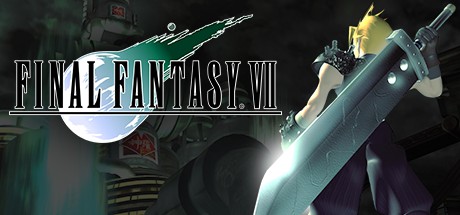
There is a single moment in Final Fantasy VII that most players who reached it in 1997 remember with unusual clarity. Not where they were in the game. Not even exactly what happened. What they remember is how it felt: the realisation that a game had done something they did not know games could do.
This is not an essay about that moment. You know which one it is. What is worth noting is that a turn-based JRPG released on three PlayStation CDs in 1997, in a genre that was considered niche outside Japan, produced an emotional response in players that has anchored it in cultural memory for nearly thirty years. The response was proportional to the achievement.
What FFVII Did
Square’s ambition in 1997 was to take the Final Fantasy formula, which had been building in complexity and emotional scale across six numbered entries, and expand it to match the production values that 3D hardware made possible. The pre-rendered backgrounds, the fully rendered CGI cutscenes (groundbreaking for the era), the full orchestrated score: every technical choice was in service of a game that wanted to feel like more than a game.
The world of FFVII is a science-fantasy hybrid where a dystopian corporation (Shinra Electric Power Company) drains the planet’s life force (Mako energy) to power a city, and the player’s eco-terrorist group (AVALANCHE) attempts to stop it. The story’s early framing, resistance against corporate environmental destruction, evolves into something considerably more cosmic and personal. The tonal range it covers over 40-plus hours is remarkable.
Cloud and the Cast
Cloud Strife, the protagonist, is not who he appears to be, and the revelation of who he actually is provides the game’s deepest character work. The mystery of his past is seeded from the opening hours and resolved with enough complexity that replays reveal foreshadowing you missed the first time.
The ensemble cast is the equal of any in the series: Tifa, Barret, Aerith (and the moment), Red XIII, Yuffie, Cait Sith, Vincent, and Cid each bring a different register to the party. Vincent Valentine, optional and missable in a first playthrough, has enough backstory to carry a separate game. He eventually got one.
The Materia System
The materia system remains one of the most elegant RPG mechanics produced. Materia are coloured orbs slotted into equipment, granting spells, summons, and passive abilities. The linked-slot combinations, which allow support materia to modify the effects of adjacent materia, create a depth of customisation that scales with how much you want to engage with it.
You can play FFVII casually, using summons and the system’s defaults, and finish it without difficulty. You can also build characters that break the game entirely through mastered materia combinations. The system rewards attention without requiring it.
How It Holds Up
Final Fantasy VII Remake (2020) and Rebirth (2024) have retold the first portion of the story with current-generation production values. They are excellent games in their own right and deliberately not replacements for the original: they are a continuation, telling a story about memory and the relationship between a beloved original and what comes after it.
The original game is available on modern platforms in pixel-remaster form and through various storefronts. The 1997 visuals, blocky and low-resolution by modern standards, read as atmospheric rather than dated in the way that pre-rendered backgrounds allow: the art direction has held up better than the polygonal characters.
Final Fantasy VII made a generation care about a medium. It is still worth caring about.