There is a specific kind of muscle memory that never fully leaves you. The weight of an original PlayStation DualShock in your hands, the particular shade of blue that was the PS1 boot screen, and the sound of Crash Bandicoot spinning into a crate. If any of those things trigger something, you already know what this article is about.
Crash Bandicoot launched in 1996 as Sony’s answer to a question the gaming press was genuinely asking: did the PlayStation have a mascot? Nintendo had Mario. Sega had Sonic. Sony had a Californian studio called Naughty Dog and a marsupial in cargo shorts, and it turned out that was enough.
What It Was
Crash is a 3D platformer that mostly doesn’t let you move in 3D. The core game funnels you through linear corridors towards the camera and away from it, occasionally opening into wider stages. It is a design compromise born from the hardware limitations of the PS1 era, and it works extraordinarily well. The linearity means the game can throw precise platforming challenges at you without worrying about camera angles. You know exactly what is in front of you. The question is whether you can execute.
The box-smashing is the bit everyone remembers, and it holds up. There is something deeply satisfying about the tactile crack of a wooden crate, the metallic clang of a TNT box being activated, and the particular anxiety of an exclamation-mark crate that you have to jump to trigger. The game communicates everything through sound and animation, no tutorial required.
Why It Mattered at the Time
Crash Bandicoot was technically extraordinary for 1996. Naughty Dog developed a custom streaming engine that allowed them to display more on-screen geometry than their competitors managed on the same hardware. The game looked noticeably better than most of what surrounded it.
More importantly, it had character. The animation work, particularly Crash’s idle animations and death sequences, gave the protagonist a physical comedy timing that was unusual for games at the time. He tripped. He stumbled. He span off cliffs with an expression of dawning realisation. That personality made losing funny rather than frustrating, most of the time.
How It Holds Up
Honestly? The first half holds up very well. The early jungle and temple levels have a clarity of design that rewards the player fairly and builds in difficulty at a sensible pace. The bonus rounds are charming. The boss fights are memorable even if mechanically simple.
The later stages are harder to defend. The difficulty spikes dramatically in ways that feel dated rather than demanding: precision jumps over pits with no margin for error, timed runs that require near-perfect execution without checkpointing. Death resets you to a stage entrance, and the collectibles-for-extra-lives economy becomes relevant in ways that would be edited out of any modern redesign.
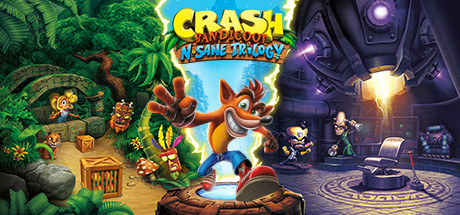
The N. Sane Trilogy remaster (2017) is the version most people have played recently, and it is an accurate recreation with better visuals. If you want the authentic experience, it is faithful enough to serve as a time capsule.
Crash Bandicoot is a product of its moment, and that is not a criticism. It solved the specific problem of making 3D platforming work on underpowered hardware, made it look good, and gave Sony something to put on their marketing. Naughty Dog would go on to Uncharted and The Last of Us. The marsupial in cargo shorts is where it started.