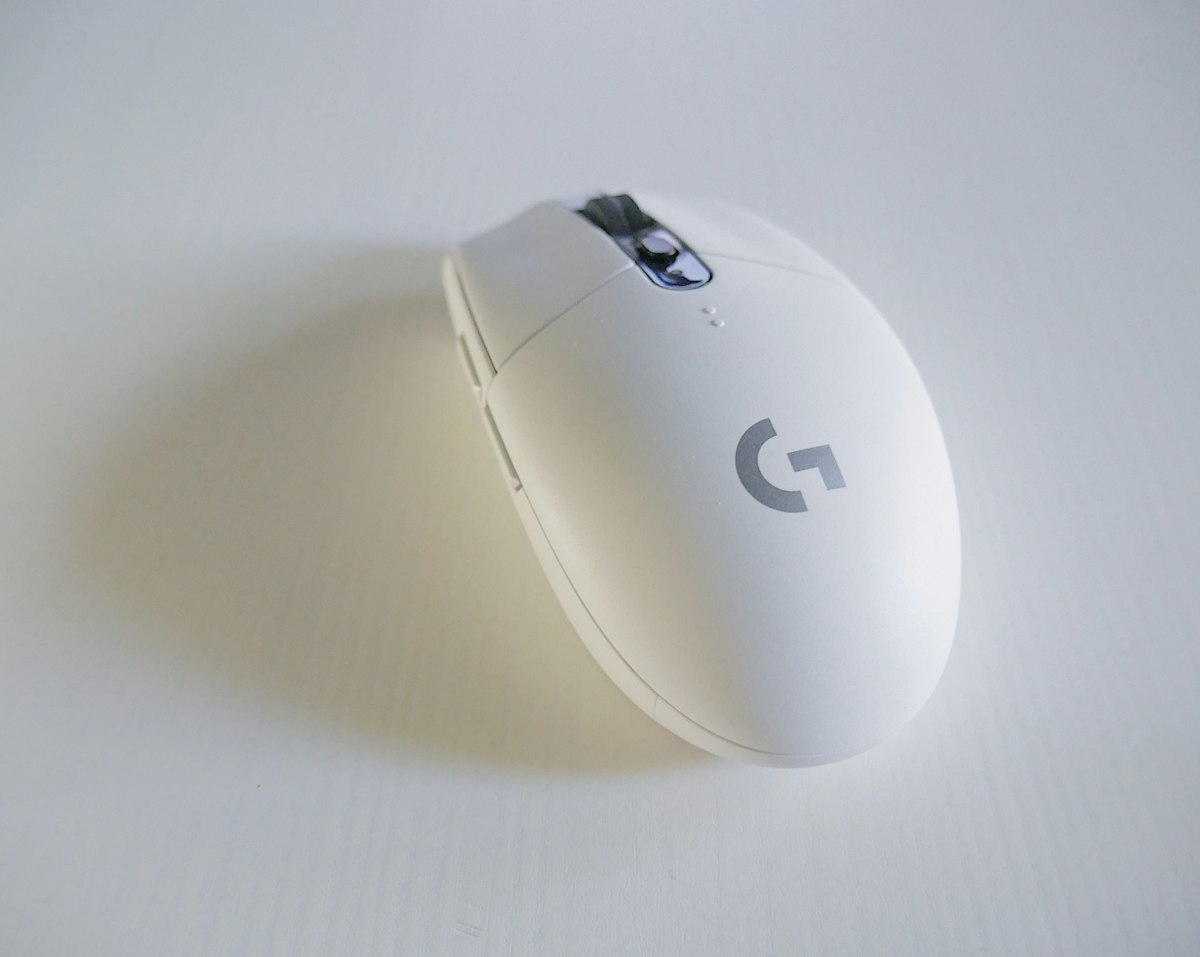
For competitive FPS players, the gaming mouse has become an almost obsessive pursuit. Weight, sensor accuracy, click latency, shape, feet. The margins at the top of the market are genuinely small, but they exist, and Logitech’s G Pro X Superlight 2 sits at the very top of them. At 60 grams, with a flawless sensor and wireless performance indistinguishable from wired, this is the mouse that the rest of the market is measured against.
The question is not whether it is excellent. It clearly is. The question is whether the improvements over the original Superlight justify the price, and who should be looking at it in the first place.
Build and Design
The G Pro X Superlight 2 looks almost identical to the original Superlight. Same clean right-handed symmetrical shape, same absence of RGB lighting (deliberate, and correct), same smooth matte finish available in white or black. Logitech has not tried to reinvent anything here because the original shape did not need reinventing.
What has changed is the weight. The original Superlight came in at 61 grams, which was already exceptional. The Superlight 2 sheds another gram to hit 60g. That is not a meaningful real-world difference in isolation, but it reinforces the engineering intent: every unnecessary gram has been removed. The PTFE feet have been revised and cover more surface area than before, giving a smoother, more consistent glide that you notice immediately if you are coming from heavier mice.
The shell itself is solid. There is no flex or creak under hand. The primary left and right click buttons feel crisp and consistent with no pre-travel, using revised optical switches that Logitech claims are more reliable over a longer lifespan than the mechanical switches on the original. In use, the click feedback is clean and quick without being harsh.
The scroll wheel is the one area where purists might quibble. It is a standard notched wheel with a slightly soft texture. Functional, not remarkable.
There is no on-board memory for profile storage, no RGB, no side buttons on the right side (it is right-hand only), and no adjustable weights. All of this is a feature, not a problem. The Superlight 2 is purpose-built for competitive gaming with nothing added that might increase the weight or add failure points.
Performance and Sensor
The HERO 2 sensor is the headline upgrade from the original Superlight’s HERO 16K. The new sensor runs at up to 25,600 DPI (though competitive players will typically use 400-1600 DPI) with a 44g LOD (lift-off distance) that is low and consistent.
In practical terms, the sensor is flawless. Zero acceleration, zero smoothing at any speed, consistent tracking on fabric, hard, and hybrid surfaces. Motion clarity at high swipe speeds is excellent, with no jitter or prediction artefacts that would compromise aim. The tracking rate has been improved to support up to 500Hz polling when connected via LIGHTSPEED 2.4GHz wireless, which brings it to parity with wired USB at 500Hz and within touching distance of the 1000Hz wired options from competitors.
The wireless connection deserves emphasis because it is genuinely indistinguishable from wired in daily use. LIGHTSPEED has always been among the best wireless implementations in gaming peripherals, and the Superlight 2 continues that. In over two months of use across hundreds of hours, there were zero instances of connection drops, stutters, or interference. The USB receiver is tiny and works reliably from well over a metre away.
Battery life is listed at 95 hours, and in testing at moderate USB polling rates this proves accurate. At 1000Hz polling (if you use the optional receiver) the life drops to around 50 hours, still excellent. Charging is via USB-C, which is the standard it should be, and a charge from flat takes around 2.5 hours.
Spec Overview
| Specification | Detail |
|---|---|
| Weight | 60g |
| Sensor | HERO 2 |
| Max DPI | 25,600 |
| Polling Rate | Up to 1000Hz (wireless) |
| Battery Life | 95 hours (standard), ~50 hours (1000Hz) |
| Connectivity | LIGHTSPEED 2.4GHz wireless + USB-C |
| Buttons | 5 (left, right, scroll click, 2 side) |
| RGB | None |
| Shape | Right-hand only |
| Price | £159 |
How It Compares to the Original Superlight
If you own the original G Pro X Superlight and are wondering whether to upgrade, the honest answer is: probably not, unless you specifically want the improved sensor polling rate or the USB-C charging port.
The sensor improvement is real but marginal for most players. The original Superlight at 61g was already outstanding. The shape is unchanged. The primary practical upgrade is USB-C charging over the micro-USB on the original, which is worth caring about in 2023 but not worth £159 if you already have a working mouse.
For anyone coming from a heavier or wired mouse, the Superlight 2 is a substantially more compelling buy. Dropping from a 90g+ mouse to 60g with wireless performance this good is a genuine adjustment that most players notice in aim and wrist fatigue over long sessions.
Worth Knowing
- Right-hand only shape. If you use your mouse left-handed, this is not for you.
- No RGB. This is a positive for battery life and weight, but worth knowing if aesthetics matter to you.
- The price is £159. This is at the upper end of the gaming mouse market. There are capable mice for significantly less.
- The shape may not suit larger hands that prefer a claw grip. It works best for palm and fingertip grip users.
- No on-board profile storage. Settings are managed through Logitech G Hub software.
- The USB receiver is not stored inside the mouse, which means it is easy to lose. Keep track of it.
- Compared to the Razer DeathAdder V3 HyperSpeed and the Endgame Gear XM2we, the Superlight 2 holds its own on performance but costs more than both.
Who Is This For
The G Pro X Superlight 2 was designed for and is most relevant to competitive FPS players. Counter-Strike, Valorant, Apex Legends: games where mouse precision, low latency, and consistent tracking directly affect your in-game performance. Players in these categories who are serious about their setup and can justify the price will find this mouse genuinely justifies its reputation.
It is also a strong buy for anyone who plays games for long sessions and suffers from wrist fatigue with heavier mice. The 60g weight and smooth feet make extended use noticeably less tiring than with mice in the 90-100g range.
It is not the right buy for players who primarily play strategy games, RPGs, or titles where mouse precision is not the deciding factor. There are excellent mice at £60-80 that will perform identically for those use cases.
Verdict
The G Pro X Superlight 2 is the best wireless gaming mouse available for competitive FPS play. The sensor is flawless, the weight is as low as you will find on a quality mouse, the wireless performance is genuinely wired-equivalent, and the battery life is exceptional. Logitech made minimal changes from the original Superlight and all of them were improvements.
The price is high. For players who take competitive gaming seriously, it is justified. For everyone else, there are very good mice at lower prices that will meet your needs without stretching to £159.
If you are in the target audience, though, this is the mouse to buy. Nothing else at this weight and wireless performance level does it better.
Score: 9/10 - Exceptional