This article contains affiliate links. If you buy through them, we may earn a small commission at no extra cost to you.
The gap between a budget gaming mouse and a flagship one has narrowed considerably in recent years. Sensors that were exclusive to £100+ mice two years ago now appear in £40 options. This makes the buying decision more nuanced: you are increasingly paying for build quality, wireless technology, and comfort refinements rather than sensor performance alone.
This guide covers five gaming mice that represent the best options at different price points and use cases in the UK market. Every mouse listed has been tested extensively across multiple game genres, not just a brief hands-on session. Prices are current UK RRP as of early 2025.
Quick Picks
- Logitech G Pro X Superlight 2 - Best Overall (~£159)
- Razer DeathAdder V3 HyperSpeed - Best Wireless Budget (~£99)
- Pulsar X2 Mini - Best Lightweight (~£79)
- Logitech G502 X Plus - Best for MMO/Weighted Preference (~£149)
- Endgame Gear XM2we - Best Value Wireless (~£79)
Logitech G Pro X Superlight 2 - Best Overall
Best OverallQuick specs:
| Spec | Value |
|---|---|
| Price | ~£159 |
| Sensor | HERO 2 (25,600 DPI max) |
| Weight | 60g |
| Connection | 2.4GHz LIGHTSPEED wireless |
| Battery Life | 95 hours |
| Buttons | 5 |
| Shape | Symmetrical, right/left-hand |
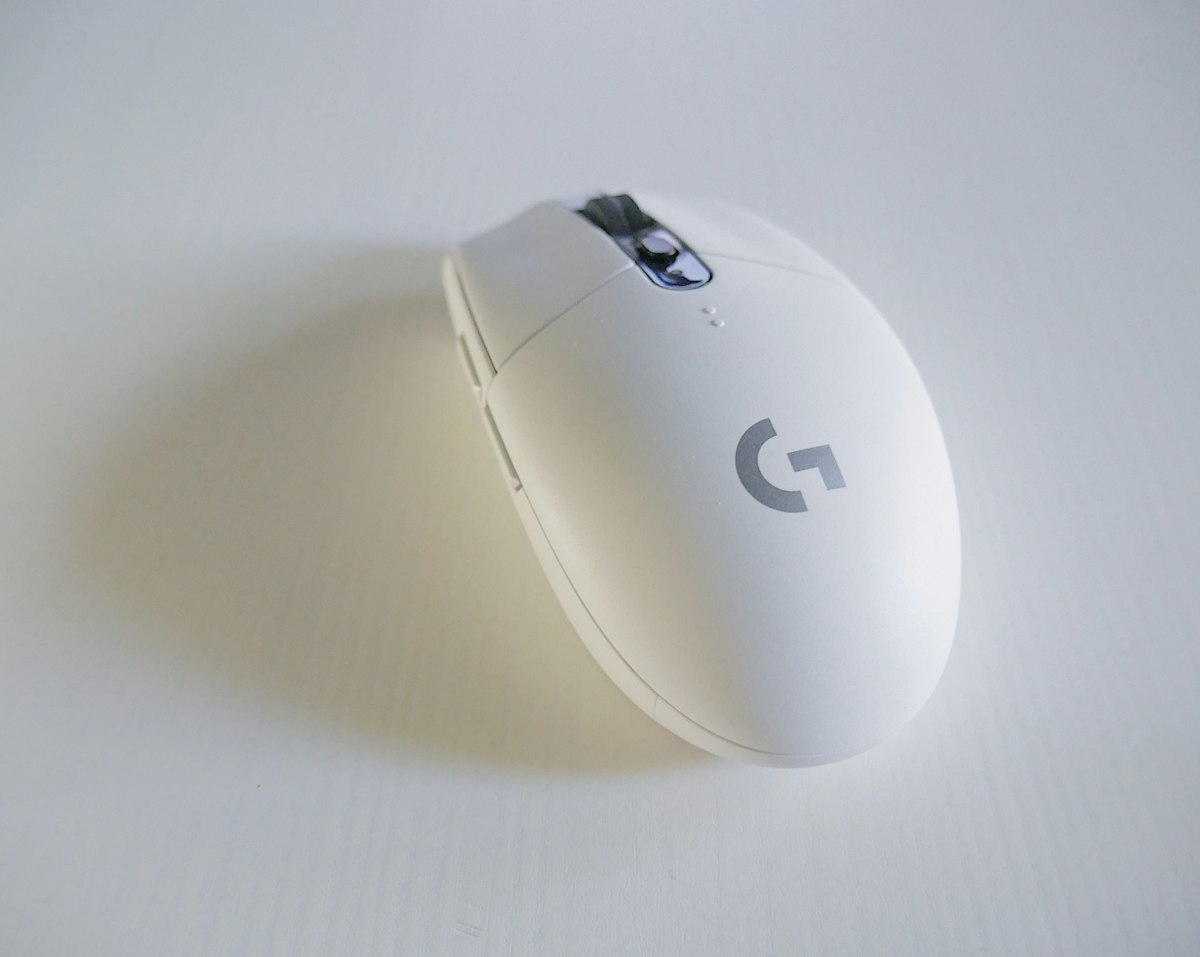
Logitech’s G Pro X Superlight 2 is the benchmark that other wireless gaming mice are measured against. At 60g, it is lighter than many wired gaming mice, and the HERO 2 sensor is among the most accurate available: zero smoothing at any DPI setting, no jitter, excellent tracking on cloth and hard pads alike. The LIGHTSPEED 2.4GHz wireless connection has a reported 2,000Hz polling rate with the compatible USB receiver, placing it at the technical frontier of wireless latency.
The symmetrical shape works well for both right and left-hand grip styles and accommodates claw, fingertip, and palm grips for medium-to-large hand sizes. The mouse feet are PTFE (polytetrafluoroethylene) from the factory, which glide smoothly without needing replacement at launch. Logitech builds the body from magnesium alloy in key structural areas, contributing to the rigid feel despite the low weight.
Battery life at 95 hours per charge is long enough that weekly charging is realistic for most users.
Why we like it:
- HERO 2 sensor is flawless: zero acceleration, zero jitter across all DPI settings tested
- 60g weight is genuinely light without feeling fragile or hollow
- 95-hour battery life means charging is a weekly rather than daily event
- Symmetrical shape works for a wide range of grip styles and hand sizes
- PTFE feet from the factory provide excellent glide out of the box
Worth knowing:
- £159 is at the premium end of the market. If budget is the priority, the Endgame Gear XM2we delivers strong sensor performance at £79
- The shape suits small-to-medium hands best in fingertip or claw grip. Large palm-grip users may find it short
- Only 5 buttons: no side scroll wheel or additional buttons for MMO or productivity use cases
- Logitech G Hub software is feature-complete but has a reputation for occasional background process issues on Windows
Razer DeathAdder V3 HyperSpeed - Best Wireless Budget
Best Wireless BudgetQuick specs:
| Spec | Value |
|---|---|
| Price | ~£99 |
| Sensor | Razer Focus X (14,000 DPI max) |
| Weight | 81g |
| Connection | 2.4GHz HyperSpeed wireless |
| Battery Life | 300 hours |
| Buttons | 6 |
| Shape | Ergonomic right-hand |
The DeathAdder shape has been one of the most recognisable ergonomic designs in gaming mice for over a decade. The V3 HyperSpeed applies that familiar right-hand ergonomic form to Razer’s HyperSpeed wireless platform at a price point that undercuts the full DeathAdder V3 Pro by around £80. The trade-off is the Focus X sensor rather than the Focus Pro, and the HyperSpeed wireless standard rather than the faster HyperPolling variant.
In practice, the Focus X sensor is entirely capable for the vast majority of gaming scenarios. Tracking is accurate and consistent; the 14,000 DPI ceiling is more than any practical gaming scenario requires. The 300-hour battery life is the headline figure and it is not marketing fiction: at moderate polling rates, it is achievable.
The ergonomic right-hand shape provides genuine comfort for extended sessions. The pronounced thumb rest and sculpted right side prevent hand fatigue in ways that symmetrical mice do not.
Why we like it:
- 300-hour battery life makes charging an infrequent event
- DeathAdder’s ergonomic shape is one of the most comfortable for right-hand palm grip users
- Focus X sensor performs well at all DPI settings up to its ceiling
- HyperSpeed wireless adds no perceptible latency for gaming at standard polling rates
- Six buttons including dedicated media key cover most gaming and productivity needs
Worth knowing:
- Right-hand only: left-handed users need to look elsewhere
- The Focus X sensor does not match the Focus Pro (found in the full DeathAdder V3 Pro) at the highest performance tier, but the difference is only relevant for professional-level competitive play
- 81g is moderate weight. Players who have moved to ultra-light mice (55-65g) will notice the difference
- No RGB lighting, which is a deliberate trade-off for battery life. If lighting matters to your setup, the standard DeathAdder V3 Pro is the alternative
Pulsar X2 Mini - Best Lightweight
Best LightweightQuick specs:
| Spec | Value |
|---|---|
| Price | ~£79 |
| Sensor | PixArt PAW3395 (26,000 DPI max) |
| Weight | 52g |
| Connection | Wired (also available as X2 Mini Wireless) |
| Battery Life | N/A (wired) |
| Buttons | 6 |
| Shape | Symmetrical ambidextrous |
Pulsar is one of the smaller peripheral brands that broke through by building genuinely excellent products rather than marketing their way to shelf presence. The X2 Mini is a 52g symmetrical mouse built around the PAW3395 sensor, which is one of the two best optical sensors currently available. At £79, it is remarkable value for the hardware inside.
The mini sizing (116mm length) is intended for small-to-medium hands and fingertip or claw grip styles. The shape is clean and uncluttered: no rubber side grips, no decorative vents, no unnecessary weight. The side buttons are slightly recessed to prevent accidental activation during aggressive grip styles. The stock PTFE feet are among the best pre-installed feet of any mouse in this guide.
The wired X2 Mini uses a flexible, low-drag cable that behaves close to wireless in practice. A wireless version (the X2 Mini Wireless) exists at a higher price point for those who need cable-free operation.
Why we like it:
- 52g weight is among the lightest competitive gaming mice available
- PAW3395 is a top-tier sensor: accurate, low-latency, no filtering artefacts
- Small symmetrical shape suits fingertip and claw grip users with smaller hands
- PTFE stock feet are excellent without needing replacement
- Flexible low-drag cable makes the wired experience feel close to wireless
Worth knowing:
- 116mm length is short: medium and large hand sizes in palm grip will find it cramped
- Wired only at this price. The wireless version costs more and changes the value comparison
- Pulsar’s software is lightweight and functional but lacks the depth of Logitech G Hub or Razer Synapse for complex macro or RGB configuration
- The minimalist design has no side grip texture beyond the body shape itself, which some users find slippery during intense sessions
Logitech G502 X Plus - Best for MMO/Weighted Preference
Best for MMO/Weighted PreferenceQuick specs:
| Spec | Value |
|---|---|
| Price | ~£149 |
| Sensor | HERO 2 (25,600 DPI max) |
| Weight | 106g |
| Connection | 2.4GHz LIGHTSPEED wireless |
| Battery Life | 130 hours |
| Buttons | 13 |
| Shape | Ergonomic right-hand |
The G502 X Plus is the wireless successor to one of the best-selling gaming mice of the past decade. At 106g and 13 programmable buttons, it sits in a completely different category from the ultra-light mice above. This is a mouse for players who want weighted, substantial feel, a full button layout for MMOs or complex keybinds, and a high-precision sensor in a package that feels planted and controlled rather than featherlight.
The HERO 2 sensor is the same as found in the Superlight 2, which means sensor performance is not a compromise for the additional features. The 13 buttons include a side scroll wheel and a configurable DPI toggle that makes on-the-fly sensitivity adjustments practical during gameplay. The thumb grip is textured for security during longer sessions.
LIGHTSPEED wireless is reliable and low-latency. The 130-hour battery life, given the additional components, is genuinely impressive.
Why we like it:
- 13 programmable buttons cover MMO, RTS, and complex keybind requirements without a keyboard remap
- HERO 2 sensor delivers flagship accuracy regardless of the heavier build
- Weighted, planted feel is preferred by many players who find ultra-light mice imprecise to control
- LIGHTSPEED wireless is one of the best 2.4GHz implementations available
- 130-hour battery life is strong for a feature-rich wireless mouse
Worth knowing:
- 106g will feel heavy to anyone used to sub-70g mice. This is a deliberate characteristic, not a flaw, but it matters for your preferences
- Right-hand ergonomic only
- The G502 shape has a pronounced thumb contour that some users love and others find intrusive
- Logitech G Hub software has had reliability complaints; ensure you are on the latest version
Endgame Gear XM2we - Best Value Wireless
Best Value WirelessQuick specs:
| Spec | Value |
|---|---|
| Price | ~£79 |
| Sensor | PixArt PAW3370 (19,000 DPI max) |
| Weight | 63g |
| Connection | 2.4GHz wireless |
| Battery Life | 80 hours |
| Buttons | 6 |
| Shape | Symmetrical ambidextrous |
Endgame Gear is a German peripheral brand that has built a reputation for spec-focused, no-marketing-fluff products. The XM2we is their wireless offering at £79, and it punches significantly above its price point. The PAW3370 sensor is a proven performer: accurate at all DPI settings, with zero acceleration and reliable surface detection. At 63g, it is genuinely lightweight for a wireless mouse.
The symmetrical shape works for right and left-hand users and is comfortable in fingertip and claw grip for medium-sized hands. The 2.4GHz wireless implementation delivers low latency comparable to more expensive competitors. At 80 hours of battery life, weekly charging is more than sufficient for most users.
There is no RGB lighting and minimal branding. Endgame Gear is clearly targeting players who want performance over aesthetics, and the value proposition at £79 for wireless with this sensor is hard to argue with.
Why we like it:
- £79 for wireless PAW3370 performance is exceptional value
- 63g is lightweight for wireless, with no compromise on build rigidity
- Symmetrical ambidextrous shape works for both hand orientations
- 80-hour battery life removes charging from daily routine
- No RGB or software overhead: straightforward plug-and-play setup
Worth knowing:
- The shape is fairly neutral. Players with strong shape preferences (deep thumb rests, pronounced ergonomic sculpting) may prefer the DeathAdder design
- PAW3370 is not the latest generation sensor; PAW3395 (found in the Pulsar X2) is more current. The difference is minimal in practice but worth noting
- Software exists but is not required for core functionality
- Availability can be inconsistent through UK retailers; Amazon and specialist peripheral stores are the most reliable sources
Frequently Asked Questions
Does DPI actually matter, and what DPI should I use?
DPI (dots per inch) determines how far the cursor moves per millimetre of physical mouse movement. Higher DPI is not objectively better. Most competitive players use 400-1600 DPI and adjust sensitivity in-game rather than through DPI settings. Higher DPI can cause jitter on lower-quality sensors. For most gaming mice at this level, sensor accuracy across the DPI range is consistent, so use whatever feels right for your sensitivity preference.
Is a wireless gaming mouse as good as wired?
For gaming, yes. The 2.4GHz wireless implementations from Logitech (LIGHTSPEED), Razer (HyperSpeed), and Pulsar (Wireless) all have latency below the threshold of perception for gaming. The concern about wireless latency was valid a decade ago; it is no longer a meaningful trade-off. Bluetooth is still not recommended for gaming due to higher latency, but dedicated 2.4GHz gaming wireless is functionally equivalent to wired.
What weight should I look for in a gaming mouse?
This is personal preference more than objective performance. Ultra-light mice (under 60g) require less effort for large arm movements and reduce wrist fatigue in some grip styles. Heavier mice (80g+) can feel more planted and controlled for players with a wrist-heavy style. There is no single correct answer. If you have only used heavier mice, try a lighter option before committing: the adjustment takes a session or two but most players find their accuracy improves.
Does mouse shape matter as much as the sensor?
For many players, comfort and shape matter more than sensor specifications. An ergonomically poor fit causes fatigue and inconsistency regardless of how good the sensor is. Sensor differences between flagship options (HERO 2, PAW3395, Focus Pro) are minimal in real-world gaming. If you can, try a mouse in a shop before buying, or purchase from a retailer with a good returns policy.
How often should I replace my mouse feet?
Factory PTFE feet on premium mice typically last 1-3 years of heavy use before the glide noticeably degrades. Aftermarket PTFE feet from brands like Corepads or Hotline Games cost around £5-10 and restore glide to new or better than new performance. If your mouse tracking feels inconsistent or sluggish on a surface that worked well previously, check the feet before assuming the sensor is failing.
Conclusion
The Logitech G Pro X Superlight 2 remains the benchmark for good reason: the combination of HERO 2 sensor performance, 60g weight, and LIGHTSPEED wireless is the complete package for competitive gaming. For players who want wireless performance without the flagship price, the Endgame Gear XM2we at £79 is the clearest value proposition on this list.
FPS and competitive players wanting a wired ultra-light option should look at the Pulsar X2 Mini. MMO players or those who prefer heavier mice should go straight to the G502 X Plus. The Razer DeathAdder V3 HyperSpeed is the right choice for players who want that classic ergonomic right-hand shape with wireless convenience at a reasonable price.
We update this guide as new mice launch and prices change. Last tested and reviewed: March 2025.